Showing posts with label slow baking. Show all posts

Friday, February 4, 2011

Slow-Rise, Kneaded Parmesan Fig Focaccia (Baked)


[ Equipment: slow cooker or oven, toaster. For more information about the terminology in this recipe, see Low Temperature Baking: A Journey of 3 Paths ].

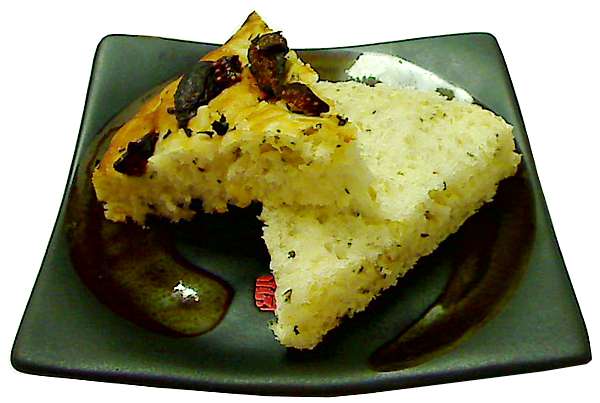
Compared to my slow-rise, no-knead focaccia, this kneaded loaf starts off with a drier, but heavier dough, enriched with olive oil and parmesan cheese. It's deliciously soft, silky and savory, but with a mellow figgy sweetness in every bite. LTB preserves the taste of the olive oil, and there is a hint of olive fruitiness throughout. This loaf is also thicker than the no-knead version - 1-1/2 inches high vs. 3/4 inch. It's best served immediately, but keeps well enough that I like to eat it without toasting for the first day or two after baking. When toasted, the bread tastes something like Cheez-It crackers.

It's the drier dough that permits the thicker bread. An identical size loaf made with a wet, slow-rise dough would bake up with a coarse texture, because LTB doesn't vaporize the moisture quickly enough. The main disadvantage is that drier doughs must be kneaded. Wet, slow-rise doughs can develop gluten during the long rise without kneading, but drier doughs may rise poorly unless the gluten is developed first. In this recipe, the presence of olive oil, basil and cheese also weigh the dough down and hamper the rise.

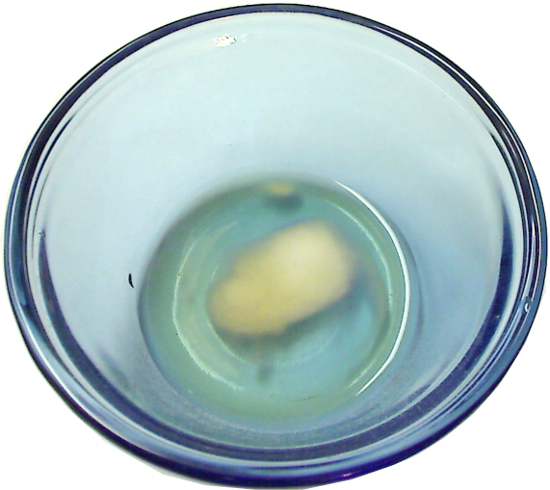
This recipe takes double the amount of yeast than a wet, slow-rise dough. To boost the yeast activity, I reanimated (proofed) the granules in a sugar and water solution before mixing it into the dough. The risen dough is lumpier than the steamed dough, but the lumps add character to a focaccia. As I said above, the dough must be kneaded adequately to develop the gluten for the first rise, or it'll be be too stiff for the yeast to lift up.

The olive oil and ground hard cheese seem to extend the freshness of the bread, as good as and possibly a little better job than the water roux in the White Sandwich Bread recipe, in exchange for an enriched and flavored dough. The recipe specifies 1-1/2 teaspoons of olive oil. I did try a bread with 2-1/2 teaspoons of oil (and without the cheese). As expected, it tasted very rich, yet not oily, possibly a little firmer, yet silkier.

The parmesan cheese should be finely ground to blend into the dough. With grated parmesan, the heat of LTB can leave some bits unfused in the bread. The powdered parmesan sold in supermarket aisles may best in terms of texture, but not for flavor. I purchased grated parmesan, the kind sold in pouches in the refrigerated display cases and then finely ground it in my spice grinder. The recipe adds it just before the second rise, so that the first rise puffs up without the extra weight. If it dries out the dough, I mist my hands to knead in some moisture.
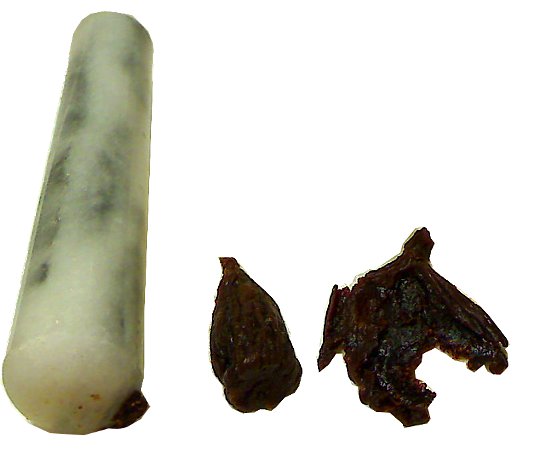


Prepare the Mission figs by first rehydrating them for 30 minutes in a bowl of hot water. Then cut the figs in quarters and flatten them to reduce their profile on top of the loaf. I flattened them with a pestle, but it's just as convenient to do it with the flat blade of a knife - the same way that garlic is flattened for mincing.
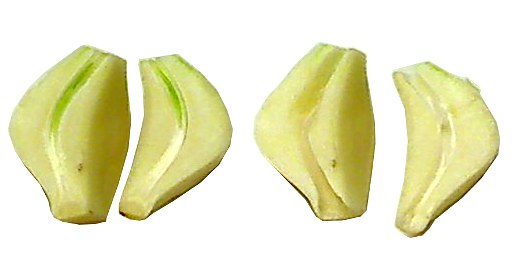


On the topic of garlic, cut out the green (sometimes light green or yellow) center shoot before mincing the clove (see the picture above). That center can taste bitter. In high temperature baking, the heat neutralizes the bitterness.

This recipe offers the option of dried or fresh basil and assumes one or the other, not both. However, each type must be prepared differently and is incorporated into the dough at different times and with different techniques. In the recipe, steps 5 to 8 show a dough containing chopped fresh basil. In the later steps, the dough contained dried basil and was topped with rehydrated dried basil. The technique for topping a loaf with rehydrated dried basil was first shown in my slow-rise, no-knead basil tomato focaccia.

The loaf in the pictures browned very nicely at LTB temperatures. To control the evaporation of moisture and ensure even baking, the pan was covered with aluminum foil and perforated with the same ventilation pattern seen in my slow-rise, no-knead basil tomato focaccia. It's designed to slow baking at the edges and promote baking at the center. The pan must be taller than the loaf in order for steam to circulate. The pan in the pictures stands 3-inches tall, twice the height of the loaf.

Makes 6 servings
- 140 calories per serving
- Oven Temperature: 250°F/121°C

Bread:
  • 1-1/4 cup all-purpose flour (6.1 oz)
  • 2 teaspoon sugar
  • 1/2 teaspoon salt
  • 1/8 teaspoon rapid-rise yeast
  • 1/4 to 1/2 cup warm water (about 100°F/38°C)
  • 1-1/2 teaspoon extra virgin olive oil
  • 4 teaspoons fresh basil, roughly chopped or 2 teaspoons dried basil
  • 5 dried figs (rehydrated, quartered and flattened - see text)
  • 1 tablespoon finely ground parmesan cheese (see text)
  • 1 teaspoon alkalized olive oil (see text and see below)
Alkalized Olive Oil (Prepare After Second Rise):
  • 1 teaspoon extra virgin olive oil
  • 1/4 teaspoon baking soda
Alkalized Olive Oil Method:


1. Put 1 teaspoon of olive oil in a small dish. Mix with baking soda.


2. When ready, apply a thin coat with a pastry brush to the top surface of the bread.

Bread Method:


1. Combine yeast and 1/2 teaspoon of sugar in a small dish. Mix in 1/4 cup warm water and let sit in for 5 mins.


2. Whisk together the flour, salt, remaining sugar and 1 teaspoon of the dried basil (or add the chopped fresh basil in step 5) in a medium bowl until well combined. I used a 1-1/2 quart plastic container with separate lid.
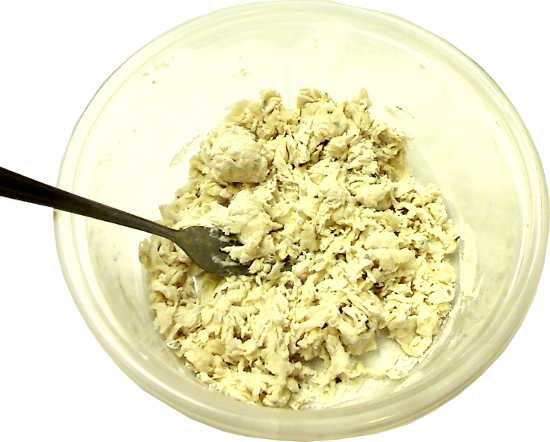


3. Add olive oil and and the yeast water. With a fork, gently toss the flour and liquids (or rub them between the hands) to form a crumbly or piecemeal mixture. If the mixture begins clumping into a dough, pull the dough apart into small pieces.
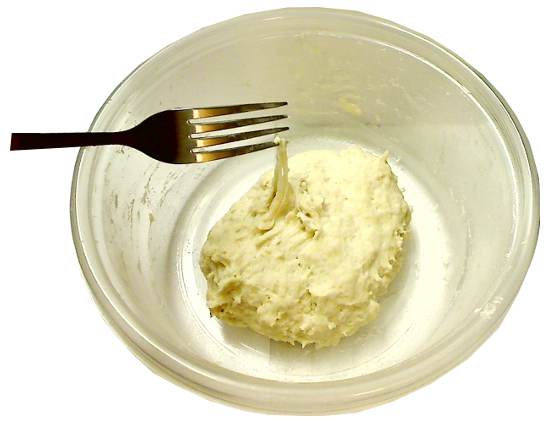


4. Mix in the remaining warm water, one tablespoon at a time, to form a moist, pliable dough (about 2 to 3 tablespoons more for 6.1 oz of flour). Knead for 3 to 5 minutes until the dough can stretch about 12 inches without breaking, but is not melt-in-the-hands gooey. When a dough goes from stiff to gooey, it's a sign of over-kneading, caused by the collapse of gluten structure. My favorite kneading technique for this amount of dough is the taffy-pull method, in which the dough is held in both hands, stretched, folded back and repeated.

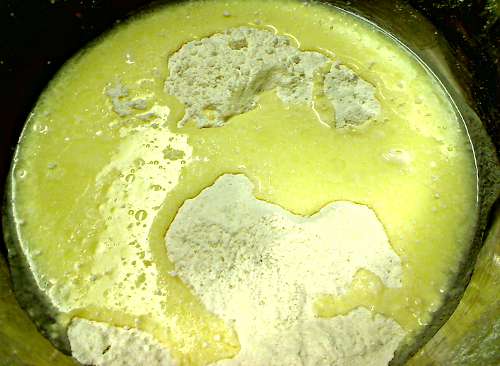
Test the dough for hydration and elasticity by slowly lifting a nub from the dough ball with a fork tine. It should stretch as shown in the picture above about an inch or more.
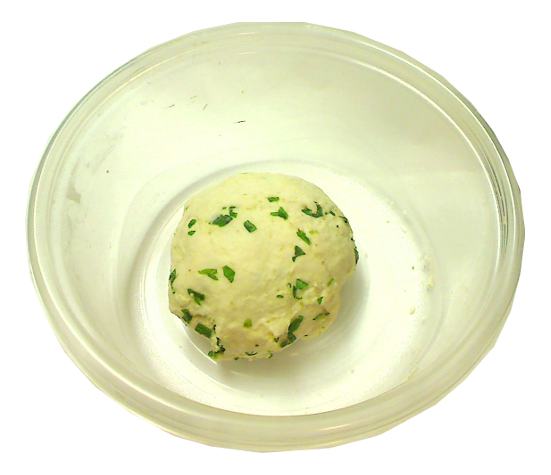
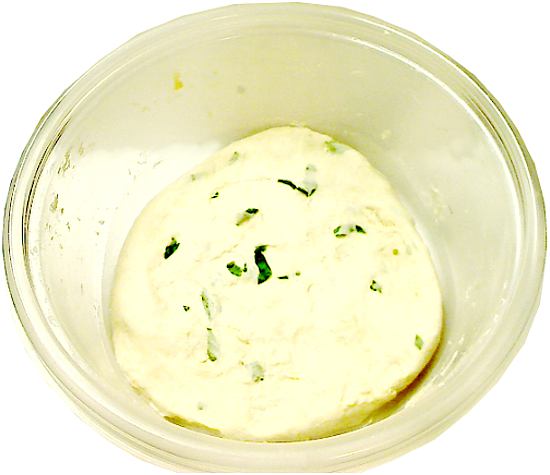


5. If using fresh basil, knead in 2 teaspoons of chopped fresh basil now. I shaped the dough into a disk for my flat-bottom container, so it's easier to check the rise height.


6. Cover and let rise in a warm place for 12 to 18 hrs. Doughs with rapid rise yeast will usually more than double (often more than triple) in bulk in 12 hours. Let rise for at least 12 hours to develop flavor.
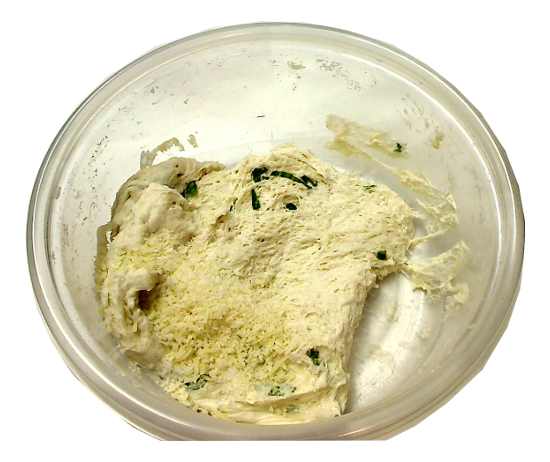


7. Gently deflate, sprinkle on the cheese and knead in. If the cheese dries out the dough, add a little moisture by wetting the hands (shake off any excess) and kneading.


8. Grease a 7-inch springform pan or cake pan with removable bottom. Shape the dough into a 5-inch disk and let rise in a warm place for 3 to 4 hrs until the loaf is about 1-1/2 inches tall.
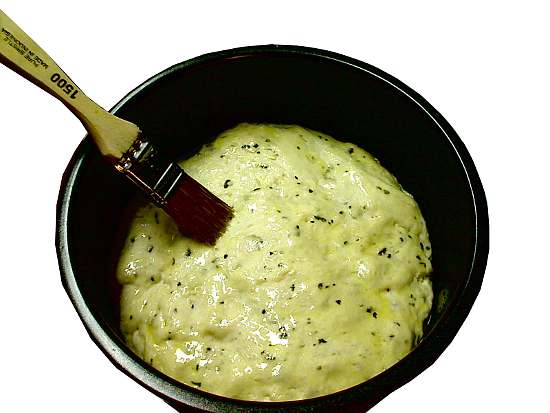


9. Brush the top of the loaf with alkalized olive oil.


10. Sprinkle on the minced garlic and remaining fresh chopped basil. To top with dried basil, rehydrate 1 teaspoon of dried basil with 2 teaspoons of hot water, drain, pick up bits of basil with a pastry brush and splatter over the loaf. (See the slow-rise, no-knead basil tomato focaccia recipe for detailed instructions).


11. Cover the top of the loaf with the sliced (and flattened) figs.
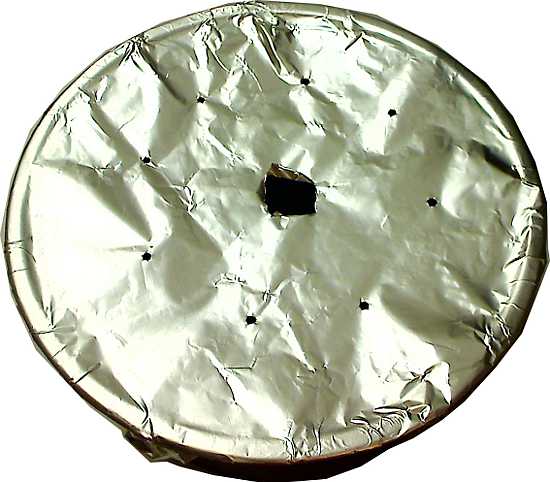


12. Cover the top of the pan with a sheet of aluminum foil and secure by tying it around the rim with string. With a knife, punch a 3/4-inch in the center of the foil. Then, with a 1/8-inch wood skewer, punch 8 holes, evenly spaced, about half way in from the rim.


13. Bake for 60 minutes. To test for doneness, insert a probe thermometer through the foil into the center of the loaf. The bread is ready if it reads around 205°F/96°C.


14. Cool for 10 minutes. Unmold. Continue cooling on a rack.


15. Slice and serve.

Cherry Cordial M&M Muffins (Baked)


[ Equipment: oven or slow cooker with temperature control. For more information about the terminology in this recipe, see Low Temperature Baking: A Journey of 3 Paths ].

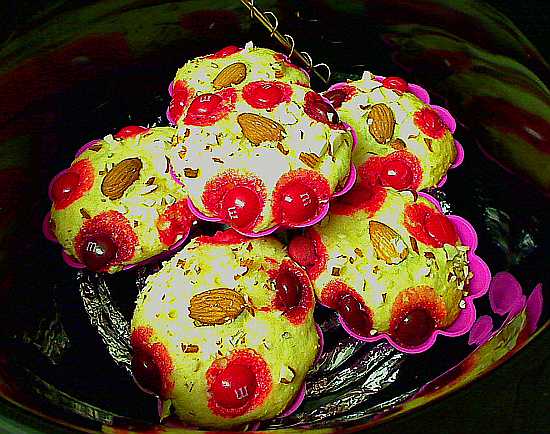
One of my local markets cleared out its holiday candies at 75% off, and I purchased a couple of 9-oz. bags of Cherry Cordial M&Ms for 75 cents each! I have not put candies into baked goods before (not on VaporBaker anyway), but these were so delicious that I wanted a way to savor them in mouth longer than the second or two it took to chew and swallow them. I put them into muffins and flavored the batter to enhance the Cherry Cordial flavors.


Because the M&Ms are fairly heavy as an ingredient (about the size of peanut M&Ms), I chose a base recipe with a stiff batter to support them. The batter for Joy Of Baking's Buttermilk Berry Muffins could be described as either a very soft dough or a very thick batter with the buoyancy to float marbles. In low ovens, less moisture in the batter also means faster baking.

The main flavors in cherry cordial candies are cherries, chocolate and almonds (from the cooked cherry pits). Of the 3, the almond flavor is the most subtle, so I put the Cherry Cordial M&Ms in an almond batter. I changed out the vanilla extract for almond extract and added a portion of almond meal for flavor and to give the muffin texture more bite.

In this recipe, the M&Ms sit atop the batter. I did make a batch with the M&Ms inside the batter, but the candy shell on the M&Ms melted into a reddish mess. The candy shell contained the cordial flavors, which faded when the shell dissolved. Putting the candies on top of the muffins preserved the flavors better, but that portion of the shell touching batter still melted, surrounding each of the candies with a red or brown halo.

If Cherry Cordial M&Ms are out of season, substitute Cherry M&Ms or make the muffins with regular M&Ms. For a healthier alternative, try dried cherries stuffed with chocolate chips. Although not absolutely necessary, I recommend toasting the almonds, both the whole and chopped forms. Toasting enhances the nutty flavor, softens the meat and takes out the astringent taste. I toasted the almonds in the microwave (2 to 3 minutes on HIGH power). Toasting them in a slow oven (250F/121C) for 30 minutes will be as effective and possibly gentler on the flavor compounds.

This recipe makes 6 muffins. Ordinarily, I would have baked them in my larger 5.5-quart cooker-oven, because that's too many to fit in my 5-quart, but the latter has the advantage of an external temperature control. To maximize the usable space in the 5-quart so that I could squeeze in a half dozen muffins, I fabricated a new spiral trivet. The trivet is a coil of rolled up aluminum foil, about 3/8-inch thick.


In the picture above, the coil trivet loosely covers the bottom of the ceramic. At the center is an upside-down metal condiment cup, measuring 2-1/2 inches in diameter x 1-1/2 inches tall. 5 muffins sit on the spiral trivet. The 6th goes on the metal cup, and will bake a little slower than the others, but not by much. When the 5 muffins below have browned with golden edges, the 6th may need more time to gain some color, if desired. The 6-muffin capacity is well worth the minor inconvenience.

Makes 6 Muffins
- 240 calories per muffin
- Oven Temperature: 250°F/121°C
  • 1 cup all-purpose flour
  • 1/8 cup almond meal
  • 1/4 cup sugar
  • 1 teaspoon baking powder
  • 1/4 teaspoon baking soda
  • 1/4 teaspoon salt
  • 2 tablespoons beaten egg (about 1/2 large egg)
  • 1/4 cup low-fat buttermilk
  • 1/8 cup low-fat milk
  • 3 tablespoons vegetable oil
  • 1/2 teaspoon almond extract
  • 30 Cherry Cordial M&Ms (see text for substitutes)
  • 1/8 cup chopped almonds, toasted
  • 6 whole almonds, toasted


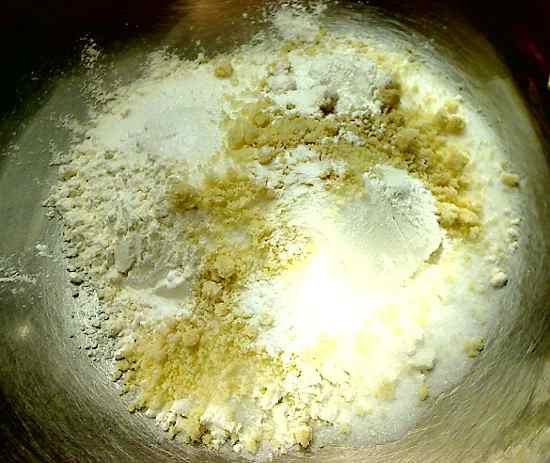
1. Into a large bowl, sift the flour, almond meal, salt, baking soda and baking powder and whisk in the sugar to combine. Or mix dry ingredients and rub them between hands to break up lumps and combine.


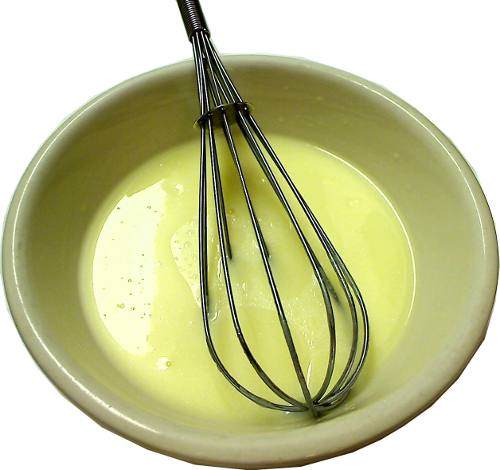
2. In a small bowl, whisk the oil, milk, buttermilk, egg and almond extract until well combined.


3. Stir the wet ingredients into the dry ingredients to form a stiff batter, about 30 seconds to 1 minute. Do not overmix. The more the batter is stirred, the smoother it will be, but the denser the texture will be due to the development of the gluten.


4. Divide the batter to fill 6 greased muffin cups (1/4-cup capacity). Sprinkle each with the chopped almonds.


5. For every muffin, press a single whole almond into the center. Then press 5 M&Ms around the almond.


6. Bake in a preheated 250°F/121°C oven for 30-35 mins. The muffins are ready when a toothpick inserted in the center of a muffin comes out clean. They should be lightly golden around the edges. Remove to a rack and cool for 10 to 15 minutes.


7. Unmold and serve. Do not allow the muffins to remain in their molds for long, because the buildup of moisture will turn the sides and bottom of the muffins soggy. To dry off soggy muffins, put them upside-down in a dehydration oven set to 110-120°F (43-49°C) for a few minutes or until the excess moisture has evaporated.

Coconut Dulce De Leche Scones (Baked)


[ Equipment: oven or slow cooker with temperature control. For more information about the terminology in this recipe, see Low Temperature Baking: A Journey of 3 Paths ].

Feb 17, 2011: Revised recipe adds coffee bean powder and molasses, and omits the egg yolk in step 5 (the yolk reappears in step 10 in the egg wash).

Denser than a cake, these scones lean more towards the tender texture of a batter bread than the rich texture of a traditional scone. Dulce de leche caramel and milk hydrate the scone dough in place of cream, with the dark brown sugar accentuating the caramel flavors. The candy store pairing of caramel and coconut only needed a bit of heat from ginger and cinnamon to perk up the flavors.

The base recipe was Cooking Light's Classic Scones. After the dulce de leche and brown sugar, I re-portioned the ingredients for a 7-inch cake pan, increased the amount of baking powder, added baking soda to counter the acid from the brown sugar, molasses and the dulce de leche, took out the vanilla for spices and a hint of coffee. I made versions with whole egg and egg white only and think the egg-white-only have the crumbly texture more like a standard scone. (Substitute 2 tablespoons of beaten whole egg for the egg white for more cake-like scones.) Dulce de leche is easy to make from sweetened condensed milk, but I already had cans of dulce de leche in my food bin, waiting for a food project.

Although I didn't change the amount of fat, I opted to replace 1/3 of the butter with vegetable oil. The one version I made with 100% butter came out a little dry, a common occurrence in LTB cakes made with all butter. The cut or rubbed butter gives the scones that flaky-like texture and enhances the milky ingredients. The coffee bean powder is standard canned coffee (medium roast) very finely ground in a spice grinder. In concert with the brown sugar and molasses, it reinforces the smokey, earthy qualities of the dulce de leche caramel.

When low-temperature baking anything much larger than a cupcake, the release of steam has to be controlled so that whole scone round bakes evenly. The vented foil pan cover slows the cooking slightly at the edge of the pan while accelerating the cooking at the center. The perforation pattern in the foil is that same as that first tried in my slow-rise no-knead focaccia. The height of the risen and baked scone round is about 1 inch, and the cake pan should be taller than that to allow steam to circulate. The cake pan in the pictures is about 3 inches tall.

Makes 8 scones
- 175 calories per scone
- Oven Temperature: 250°F/121°C
  • 1-1/4 cup all purpose flour
  • 1/2 teaspoon ginger
  • 1/4 teaspoon cinnamon
  • 1/8 teaspoon coffee bean powder (see text)
  • 1/4 teaspoon baking soda
  • 1-1/2 teaspoon baking powder
  • 1/4 teaspoon salt
  • 3 tablespoons dark brown sugar (packed)
  • 2 tablespoons butter
  • 1 tablespoon vegetable oil
  • 1/4 cup dulce de leche
  • 1/8 cup low-fat milk or low fat-fat coconut milk
  • 1 large egg, separated
  • 1 tablespoon molasses
  • 1/4 cup baker's coconut (shredded, sweetened)
  • 1/8 cup chopped walnuts


1. In a large bowl, whisk the flour, sugar, salt, spices, coffee bean powder and baking powder until well combined.


2. Slice butter into small cubes and add to flour mixture. Cut butter into the flour with a pastry blender or fork or rub the butter and flour between the hands until crumbly and uniformly distributed.


4. In a small bowl, whisk the dulce de leche and milk until smooth and combined like a sauce. If the dulce de leche is too stiff, microwave it for a few seconds to soften it.


5. Then whisk in the egg white, molasses and and 1 tablespoon of vegetable oil.


6. Stir the dulce de leche liquid into the flour until it forms a soft dough. If the dough is too dry, mix in a little more milk or some of the beaten egg.


7. Add the baker's coconut and knead the dough briefly (5 to 8 seconds) until the coconut is evenly distributed.


8. Grease a 7-inch springform pan or cake pan with removable bottom. Cut out a 7-inch diameter circle from wax paper or parchment paper and place in bottom of pan. Grease the top of the paper.


9. Put dough into pan and press dough out evenly to cover the bottom of the pan.


10. Score dough with knife to form 8 wedges. The score marks will fill in during baking, but a faint outline should remain as a slicing guide. Mix the egg yolk with 1 teaspoon of water to make an egg wash. Brush the scones with the the egg wash.


11. Sprinkle with chopped walnuts. Lightly press the walnuts in the dough.


12. Cover the top of the pan with a sheet of aluminum foil and secure by tying it around the rim with string. With a knife or scissors, cut out a 2-inch hole in the center of the foil. Then, with a 1/8-inch wood skewer, punch 12 holes, evenly spaced, about half way between the rim and the center hole.


13. Bake in a preheated 250°F/121°C oven for 50 to 60 minutes. Test for doneness by inserting a thin wood skewer through the center hole into the scones. It's ready if the skewer comes out clean. The center should firm, the surface dry and the edges a golden brown.


14. Cool and unmold.


15. Slice and serve.