Thursday, September 30, 2010

Star Anise Bizcochitos


[ Equipment: oven or slow cooker. For more information about the terminology in this recipe, see Low Temperature Baking: A Journey of 3 Paths ].

A small bag of star anise pods sat in my food bin for months until I discovered bizcochitos, New Mexican shortbread cookies with anise seeds as the primary flavoring. Anise seeds and star anise are very close in taste (star anise is said to be a little more bitter), so I reckoned the substitution would be just about perfect. Plus, regular shortbread cookies bake in relatively cool ovens. Basic bizcochito recipes would need only minor tweaks to adapt them for LTB.

The origin of bizcochitos dates back hundreds of years to the early Spanish settlements in the Americas. They are a great source of cultural pride, as they are the official cookie of New Mexico. Even the spelling of the name with a "z" (bizcochitos as opposed to biscochitos) emerged from legislative debate. I can't say how well my cookies compare with authentic bizcochitos from a New Mexican bakery, but I can say they are delicious, lightly sweet and aromatic with a gentle taste of licorice and cinnamon and essence of dried grapes.

Traditional bizcochitos are made with lard, and some recipes I studied warned that cookies made with vegetable shortening would not possess authentic flavor and texture. I could not find lard at my local markets, so I had to try the shortening instead. In pastries baked a low temperatures, the taste of the shortening is not completely masked by the other ingredients. Cookies made with all butter had excellent flavor but lacked the same degree of crispness. So, I settled on a blend of half butter and half shortening (1-1/2 tablespoons each of butter and vegetable shortening to make 3 tablespoons of the blend). The recipe does list lard as an alternative, but I have never actually baked these cookies with lard at low temperatures, so I cannot vouch for the result.

The raisin water is, in my opinion, a flavor-packed alternative to the wine and/or orange juice in many bizcochito recipes. It's very easy to make. Freeze any leftover raisin water or add it to a beverage (like yummy chocolate milk). Of course, wine or orange juice can substitute for the raisin water, if desired.

Ground cloves are not a common spice in bizcochitos, but the small amount in the dough ties all the flavors together and cleans up the anise aftertaste. By comparison, the cookies without the cloves taste kind of drab. I don't recommend omitting it.

I made my own star anise powder by fine grinding whole star anise pods in a coffee or spice grinder. A small bag of the pods cost me about $1 US, which when ground into powder will fill a standard 2 oz. spice jar. If star anise isn't available, an equal amount of ground anise seed should work as well.

This is the first slow-baked cookie recipe on VaporBaker (not counting any pastries with a cookie-like shell). In normal baking, cookies require a large amount of oven real estate to spread out as they bake. My LTB ovens are converted slow cookers and would yield tiny batches of those kinds of cookies. Then one day, I saw celebrity chef Emeril Lagasse on TV demonstrating how to bake shortbread cookies in a round pan without wasting any space and obtaining a respectable yield. I immediately realized that the technique could be adapted for cramped ovens like mine.

Makes 8 or 12 cookies
- 90 (12) to 135 (8) calories per cookie
- Oven Temperature: 250°F/121°C

Cookie Dough:
  • 1 cup all-purpose flour
  • 1/4 teaspoon baking powder
  • 1/2 teaspoon ground star anise (see text)
  • 1/4 teaspoon ground cinnamon
  • 1/8 teaspoon ground cloves
  • 1/8 teaspoon lemon zest (dried or fresh)
  • pinch salt
  • 1/4 cup sugar
  • 3 tablespoons 50-50 butter-shortening blend or lard (see text)
  • 1 egg yolk
  • 1 tablespoon raisin water (see text)
Raisin Water:
  • 1-1/2 tablespoon raisins
  • 1/4 cup boiling water
Topping:
  • 1 teaspoon sugar
  • 1/8 teaspoon ground cinnamon
  • 1/8 teaspoon ground star anise
Preheat oven or cooker to 250°F/121°C.

Raisin Water Method:


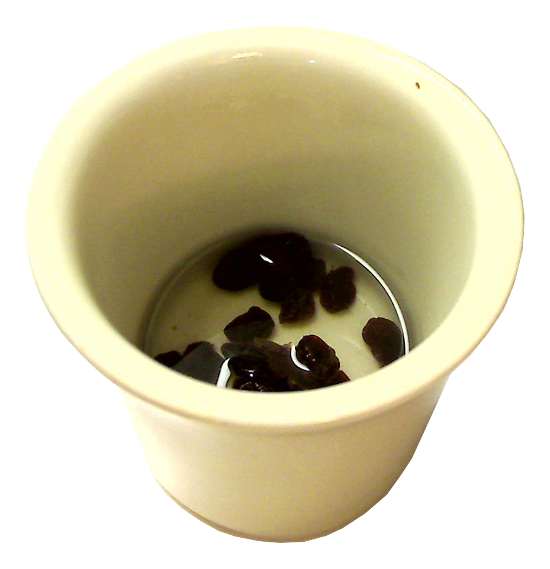
1. Put raisins in a cup and cover with the boiling water. Cover and allow the raisins to reconstitute for at least 30 minutes.
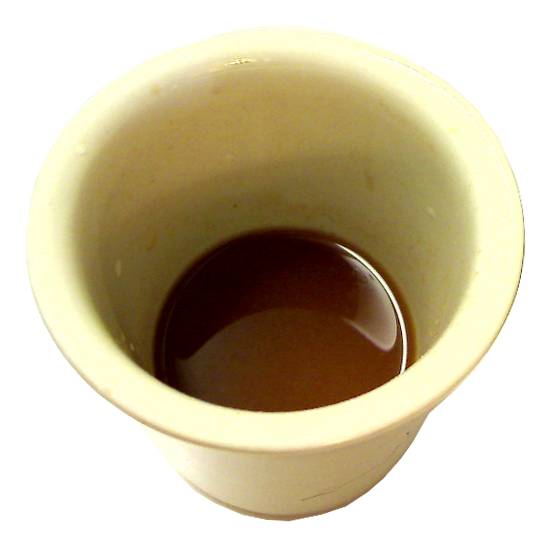


2. Pour the raisins and water into a mini food processor or blender and puree (or puree with an immersion blender). Strain, pressing the pulp to extract the last drops of flavored liquid.

Cookie Method:
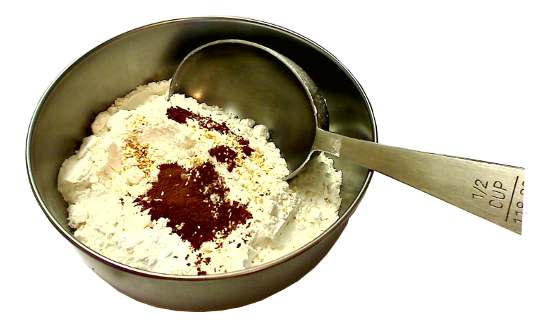


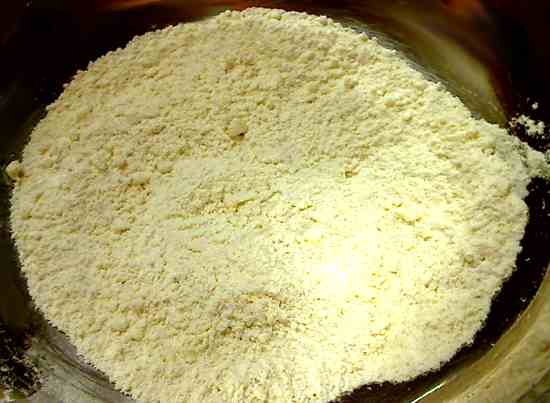
1. In small bowl, whisk all of the dry ingredients (except the sugar) to thoroughly combine and set aside.
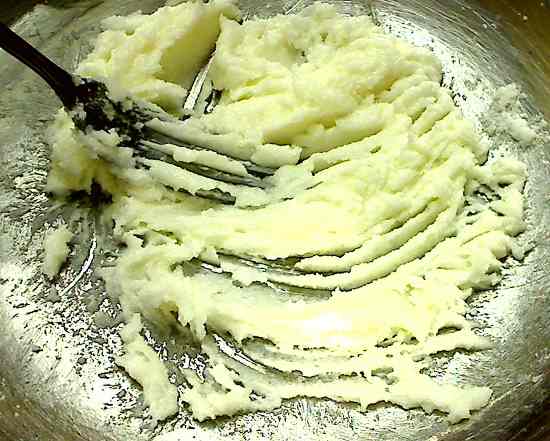


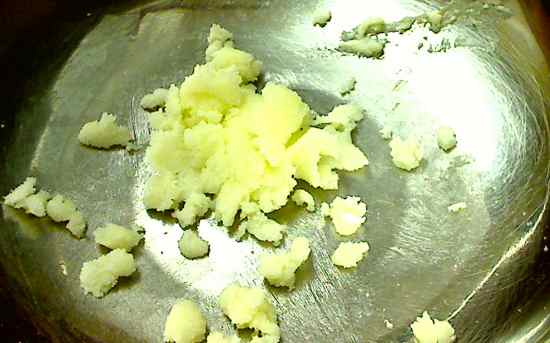
2. In a large bowl, cream shortening and butter (or lard) and sugar with a fork.
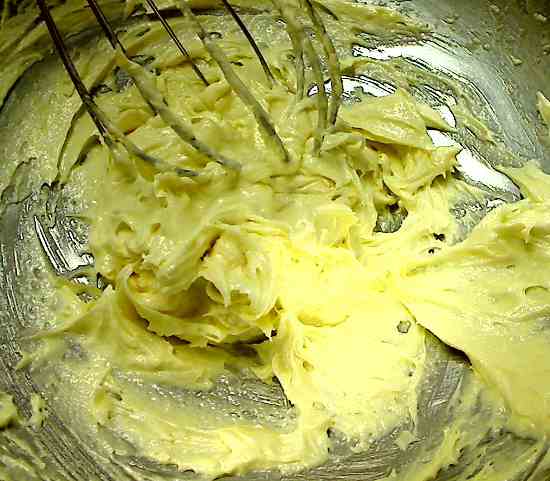


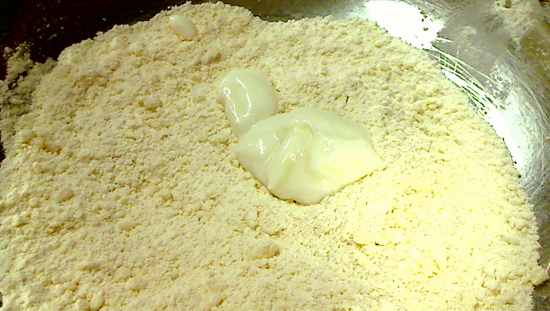
3. Add egg yolk and raisin water, and beat with a whisk until light and fluffy.
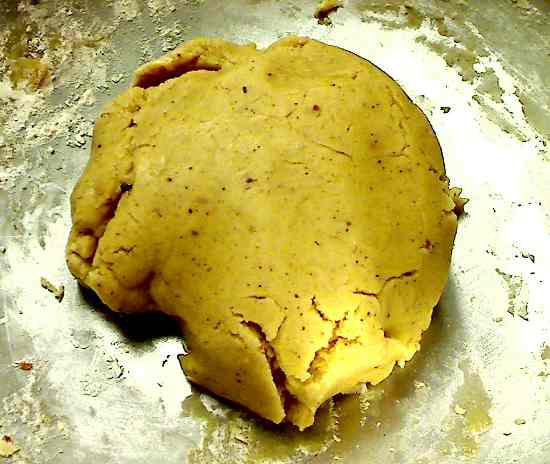


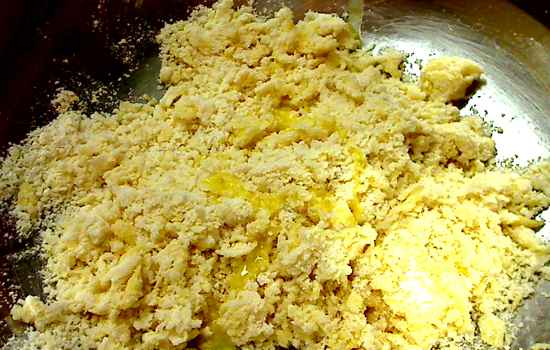
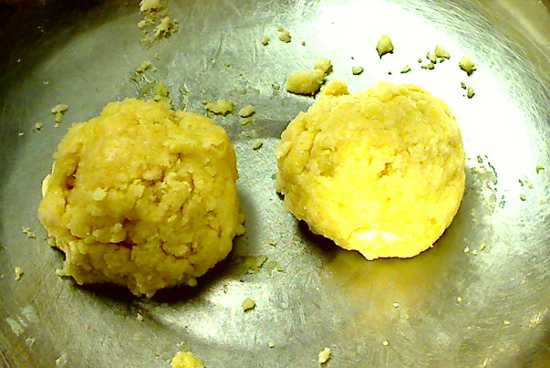
4. Add flour in portions, mixing with the whisk and then a wood spoon and then kneading in the final portions of flour to form a VERY stiff dough. If the dough is too dry and won't incorporate all the flour, add drops of raisin water to soften the dough a little. Knead a few more times to form a smooth surface. Do NOT overknead.


5. Grease a 7-inch springform pan or cake pan with removable bottom. Cut out a 7-inch diameter circle from wax paper or parchment paper and place in bottom of pan. Grease the top of the paper.
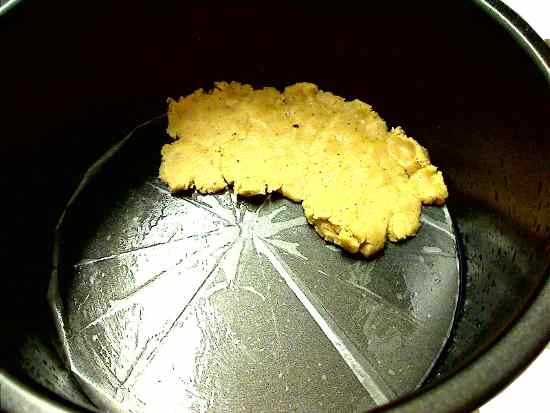


6. Break off pieces of the dough, and pat them evenly onto bottom of pan.
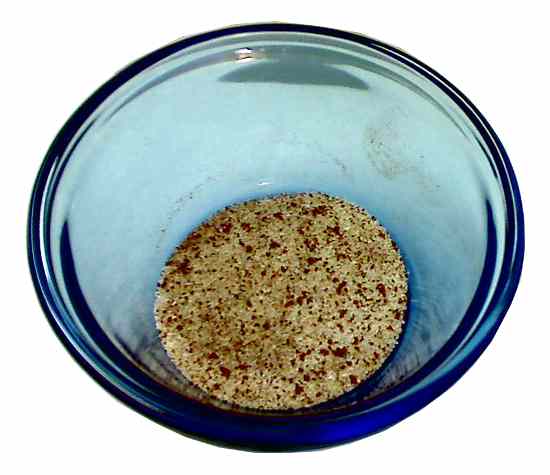


7. In a small dish, combine ingredients for topping.
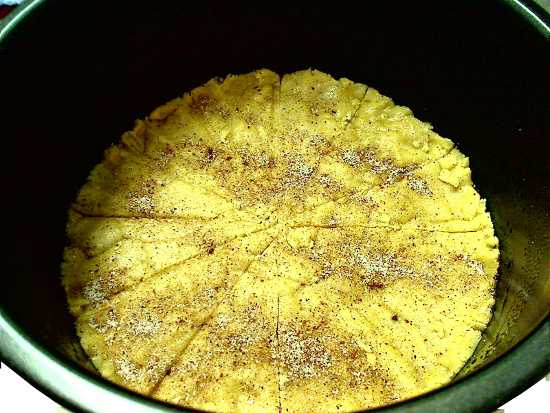


8. Sprinkle sugar mixture over the dough. Score the dough with a knife or flat-bladed dough scraper into 8 or 12 wedges. The scoring should go through the thickness of the dough. Bake for 50 to 60 minutes or until the edges are a light golden brown.

If baking in a cooker, put moisture-absorbing paper towels under the lid. When the cookies are done and if there is moisture condensation on top of the cookies (as often happens in small ovens or cookers), remove any moisture-absorbing towels and continue baking another 5 minutes or so with the cooker lid ajar to dry them off.
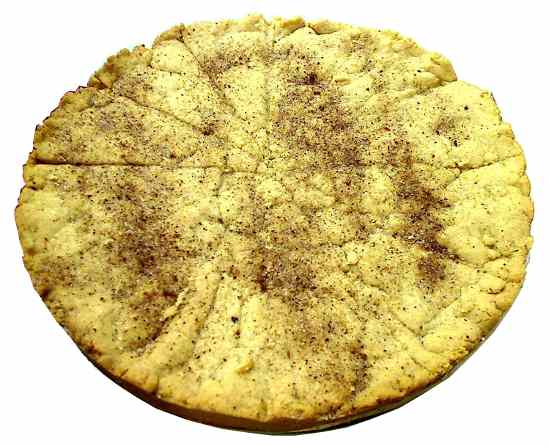


9. Cool and unmold. With a knife, press down into score marks on the cookies to separate them.

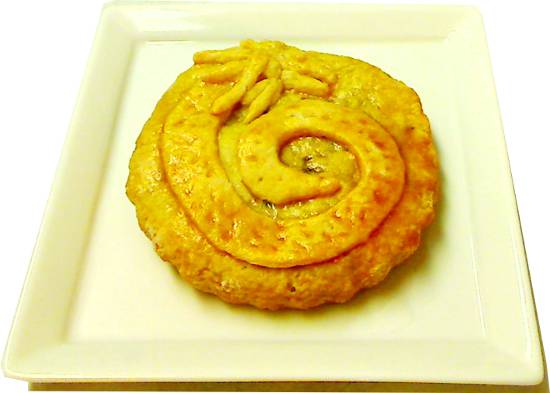
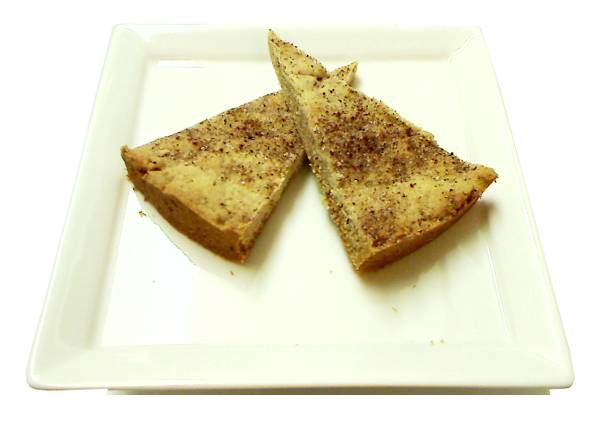
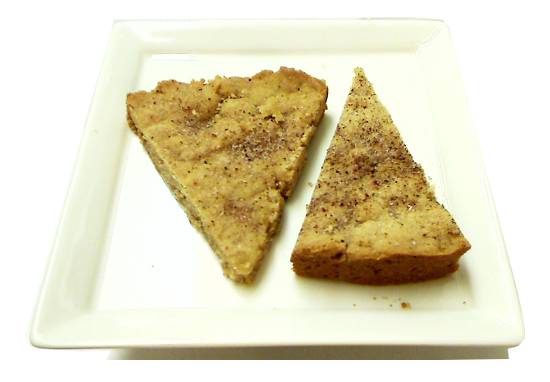
Below is a picture showing 2 bizcochitos: one from an 8-cut and one from a 12-cut.
Thursday, September 23, 2010

Chinese Mooncakes With Plum-Lima Bean Filling (Baked)


[ Equipment: oven or slow cooker. For more information about the terminology in this recipe, see Low Temperature Baking: A Journey of 3 Paths ].

The Chinese Moon Festival happens on September 22 this year, which means: it time for eating mooncakes! This recipe is a healthier take on the classic pastry. It begins with a filling made from dried plums and baby lima beans, replacing the traditional red bean paste which was loaded with fat and sugar. The shell is a low-fat, soft crumb version of the crispy, eggy crust of Shanghai mooncakes from Malaysia. All together, this tasty reconstruction has 1/3 the calories of the mooncakes of yore.

Many people prefer to buy mooncakes than make them under the mistaken belief that they require fancy molds and esoteric ingredients. The popular thin-skinned Cantonese mooncakes sold in the US are molded, but other styles, like the Shanghai mooncakes, are shaped by hand with varying degrees of decoration. Homemade mooncakes can be as elaborate as the baker has time to lavish on them, pleasing the eyes and palette - and the wallet, since a single mooncake can cost over $10 US, and prices are rumored to be higher this year.

This recipe doesn't jettison the original concept of mooncakes, as some of today's so-called mooncakes might be accused of doing. In the ingredients and the form are elements of the past. Although the basis of the filling is pureed dried plums, the baby lima beans give structure, cut the intense sweetness and echo the legume nature and shading of traditional red bean paste. (Prepare the beans by soaking them in water ovenight; then simmer until tender, about 40 to 50 minutes.) The 1/2 to 1 teaspoon of sugar is to taste. It acts as a preservative too, since the lima beans dilute the sugar concentration and could weaken the anti-bacterial properties inherent in the dried fruit.
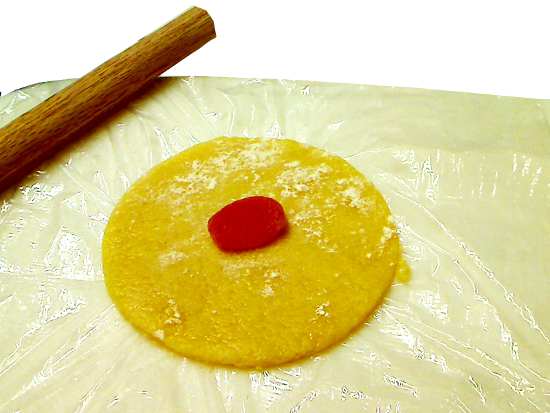
The rich brown of the plum-bean paste contrasts nicely with the yellow-orange of the whole dried apricot, representing the moon (and standing in for the traditional salted egg yolk). Alternatives to dried plums include dried figs or dates. The lima beans could be replaced with another firm, mild flavor bean like mung beans or soy beans or try any bean in the cupboard. Dried nectarines, peaches or kumquats would make fine moons too, if they are small and fit inside the pastry.

I first read about Shanghai mooncakes at Corner Cafe. They originated in Malaysia, not Shanghai, by way of a similar pastry from Hong Kong. For my recipe, the biscuit crust has been modified in content and technique to reduce the fat and develop a flakier crumb. Yogurt compensates for the excised butter. It imparts richness as well as hydrates the dough. I originally substituted more beaten egg, but decided that the strong eggy flavor competed with the filling. Plain yogurt is fine, but vanilla yogurt brings a touch of smoothness.

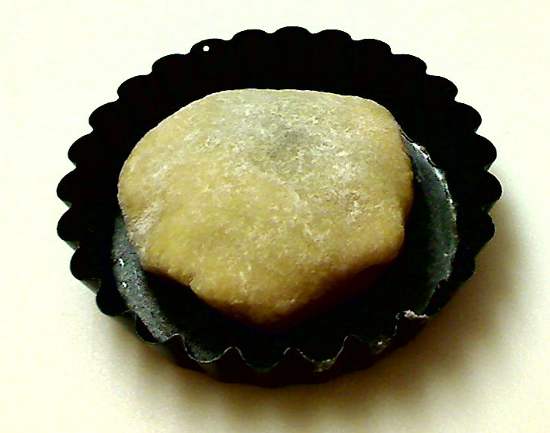
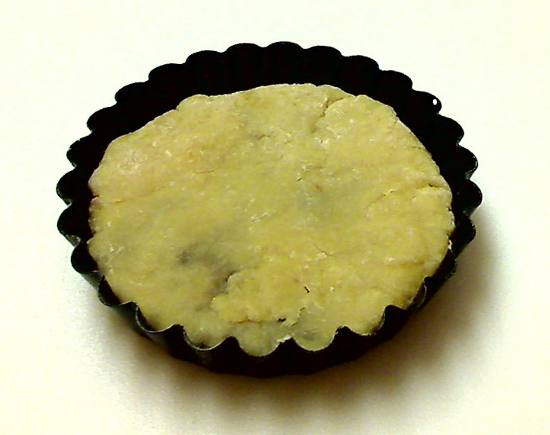
Shanghai mooncakes have a crispy, crunchy shell, while the skin on Cantonese mooncakes is soft and chewy. In both types, the dough is kneaded to develop the gluten. In this recipe, the wet ingredients are incorporated into the dough with very little kneading or stirring to avoid developing the gluten for a tender, flaky pastry, as in a pie crust. In the alternative, for a more traditional, chewier texture, the dough could be kneaded briefly. I pressed the mooncakes into mini tart pans to flatten them into disks and flute the edges, like the scalloped sides on Cantonese mooncakes.

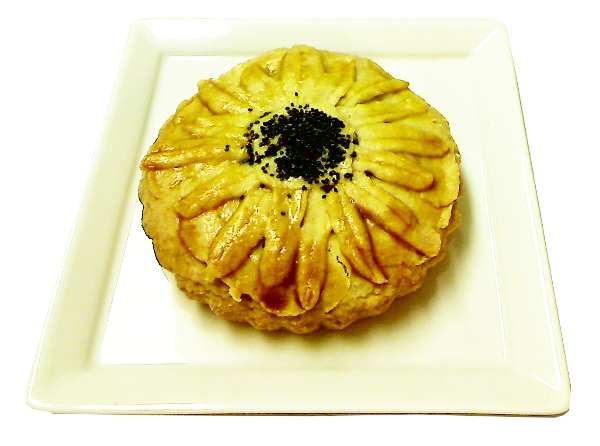
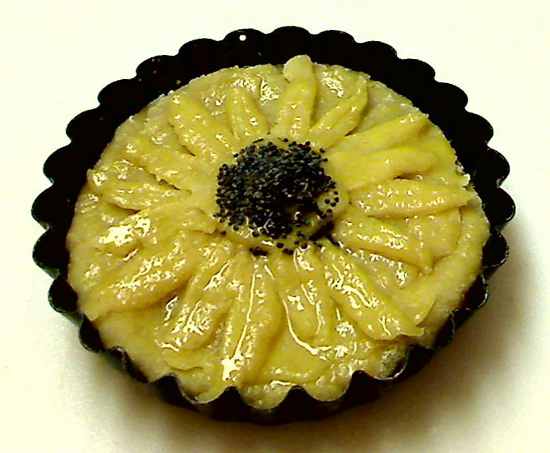
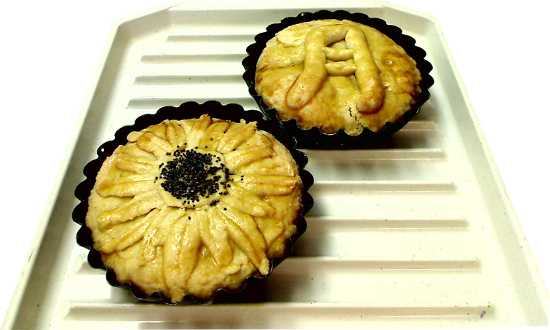
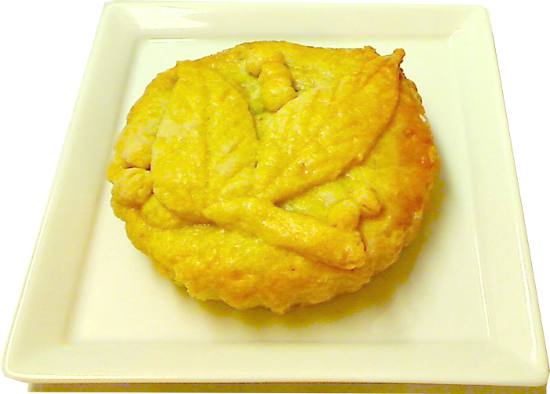
The decoration on top of Shanghai mooncakes can be as simple as almond slivers or pumpkin seeds arranged in an attractive pattern. However, consumers have come to associate the fine and fancy reliefs on Cantonese cakes as a measure of quality. While hand-crafted individual designs are too labor intensive for commercial sales, artisan and home bakers can let their imaginations fly. For the cakes the pictures, I cut out designs from scrap dough, embossed them with the dull back of the knife, laid the pieces out on top and varnished the surface with egg wash to glue them down. An alternative to cutting out and assembling the designs is to imprint the scrap dough with a small cookie mold or stamp it with a cookie stamp.

Makes 2 mooncakes
- 310 calories per mooncake
- Oven Temperature: 250°F/121°C

Pastry:
  • 1 tablespoon butter or vegetable shortening
  • 1/8 cup sugar
  • 1/4 teaspoon baking powder
  • 1/2 cup flour
  • pinch of salt
  • 1 tablespoon plain or vanilla yogurt (see text)
  • 1 egg beaten (see text)
Filling:
  • 12 dried plums or prunes (about 1/2 cup)
  • 1/8 cup cooked baby lima beans (see text)
  • 1/2 to 1 teaspoon sugar
  • 2 dried apricots (see text)

Filling Method (makes about 3 tablespoons):


1. Put dried plums, lima beans and sugar in a small bowl and with an immersion blender, puree to a smooth paste. Alternatively, put ingredients in mini food processor and puree to a smooth paste.


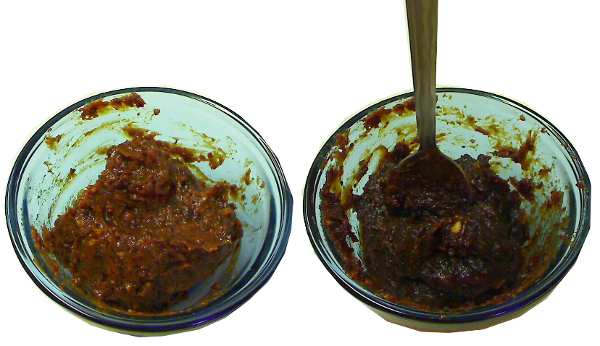
2. Transfer paste to a microwave-safe dish and heat on HIGH for 15 to 20 seconds. Remove (careful, dish may be very hot) and stir paste vigorously for about 30 seconds to release steam and cool. Put back in the microwave and repeat heat-stir process another 5 or 6 times, until mixture has darkened and stiffened to the point that an inserted spoon will remain standing.

Alternatively, transfer paste to a small nonstick fry pan and stir over low heat until mixture has darkened and stiffened to the point that an inserted spoon will remain standing.


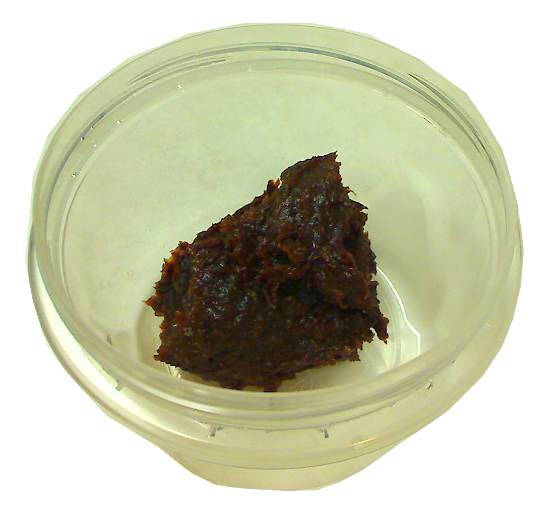
3. Cool and store in a closed container or plastic bag. Refrigerate until ready to assemble mooncakes.

Pastry Method:

Pre-heat oven or cooker to 250°F/121°C.


1. In a bowl, cream butter and sugar with fork until well combined.


2. In a small bowl, mix flour, baking powder and salt until well combined. Cut flour mixture into butter mixture with a fork or pastry blender until mixture looks uniformly crumbly.


3. Add yogurt and gently toss in flour until yogurt is evenly distributed.


4. Add beaten egg, one teaspoon at a time, using toss, press, crumble actions until mixture just comes together and forms a dough (about 3 to 5 teaspoons). Avoid stirring or kneading the dough or the gluten will toughen the pastry (or lightly knead for a chewier texture - see discussion above).


5. Divide dough into 2 portions.


6. Shape each portion into a small disk and cover with plastic wrap (plastic wrap should be larger than 6-inches square). Refrigerate for 30 minutes.


7. Unwrap one disk, lightly dust the dough and plastic with flour, and place disk on center of plastic wrap. Place a another piece of plastic wrap over the dough and roll out a rough circle about 5-1/2 to 6 inches.


8. Remove top plastic wrap, dust with flour and press a 4-1/2 inch round cookie or biscuit cutter into dough. Peel off excess dough and save for decoration. The 4-1/2 inch dough circle could be cut out freehand with a knife too. The cookie cutter method is only a convenience.


9. Optional: place a dried apricot in the center of dough.


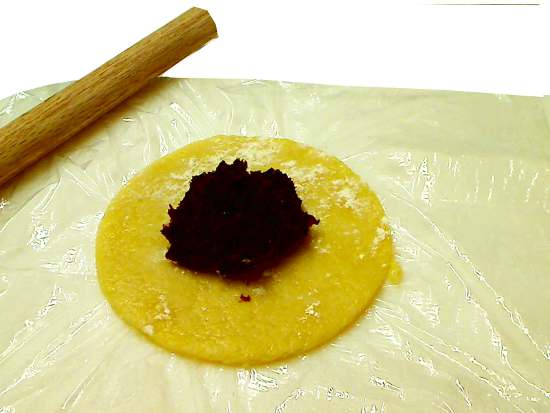
10. Put 1-1/2 tablespoons of filling in center of dough, covering the apricot.


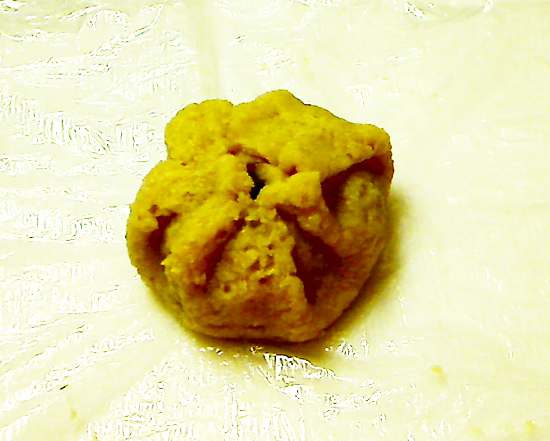
11. Lift up sides of dough to wrap the filling and pinch the top closed to form a ball. If the dough is very moist and threatens to tear, slide a butter knife or a frosting spatula under the dough and gently lift up over the filling.


12. Dust the dough ball with flour and gently flatten into a disk, about 3-inches in diameter. Put the disk into a greased mini-tart pan (4-inches diameter), seam side down.


13. Press disk outward until the disk touches the sides of the pan. If there are any thin spots on the surface, cover them with thin sections of scrap dough and rub down edges. The patches don't have to be blended into the surface, because any telltale seams will be hidden by decoration.


14. With scrap dough, create a decoration on top of the mooncake. Typical mooncake images include flowers, leaves, animals, fishes, abstract patterns and chinese characters. Brush the mooncake with an egg wash made from the leftover beaten egg thinned with 1 or 2 teaspoons of water. In the above picture, the flowerhead on the daisy decoration was covered with poppy seeds for a 3-dimensional effect. The poppy seeds were sprinkled on after the egg wash so they would adhere to the surface.


15. Bake at 250°F/121°C for 60-70 minutes until golden brown. Cool for 30 minutes and unmold. Put the mooncakes on a rack and continue cooling until the bottoms of the mooncakes are dry.


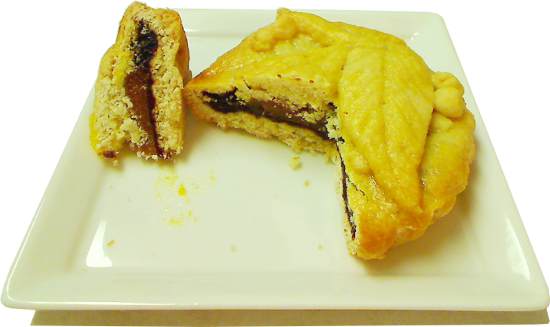
16. The picture above shows the inside of a mooncake with apricot "moon". I've stored these mooncakes at room temperature for over a week. The high sugar, low moisture filling resists spoilage. However, I strongly recommend that they be stored in the refrigerator in an airtight plastic bag or container for maximum freshness.

Shown below are some more of my mooncake creations. The designs are (in order) a Chinese dragon, leaves and berries and the Chinese character for "moon".


Crochet A Slow Cooker Draft Stop


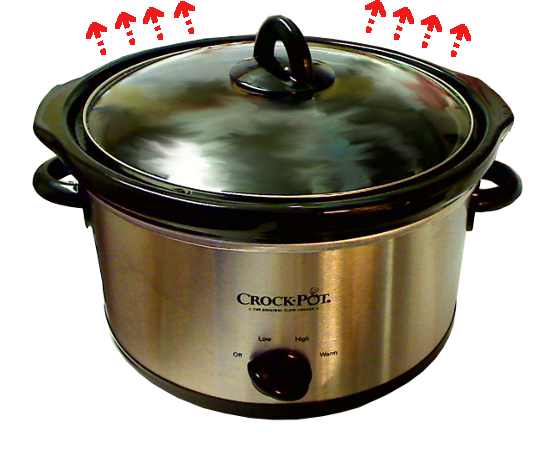
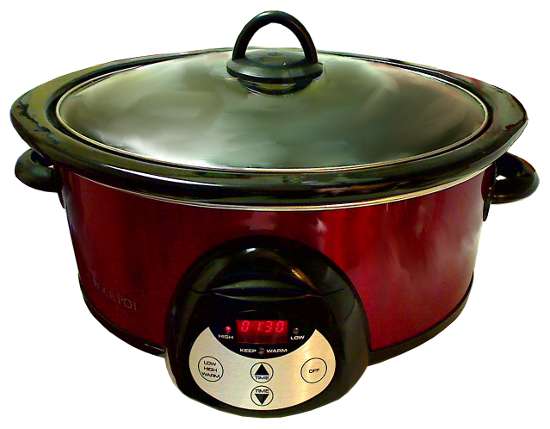
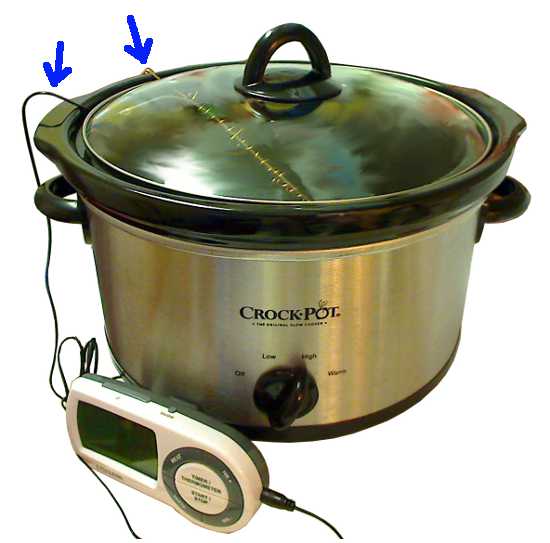
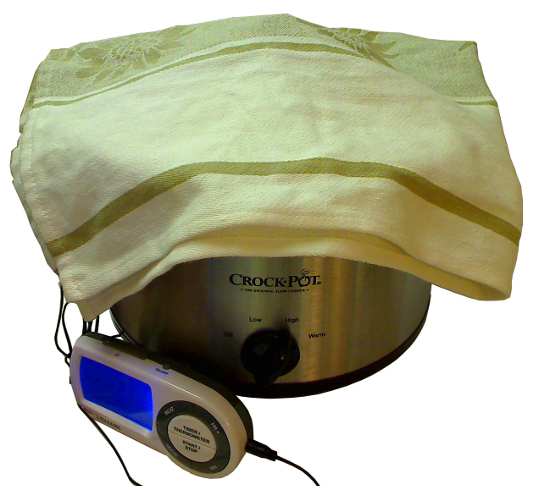
When a recipe instructs to preheat the oven to 250°F/121°C and the oven is an unadorned slow cooker or worse, a slow cooker with a thermometer probe going under the lid, several hours could pass before it's ready. One reason it takes so long is the heat leaking from the lid, which lacks the insulating layers of the rest of the cooker and sits loosely on the crock rim. A thermometer probe props the lid open and accelerates the heat loss. The age-old solution has been to pile layers of towels over the lid. However, the added weight could crush a probe's cord or damage the probe itself, never mind the precariousness of the unsightly linen pile in the kitchen.


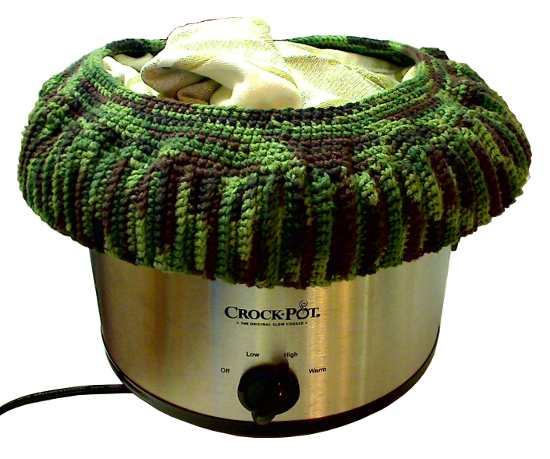
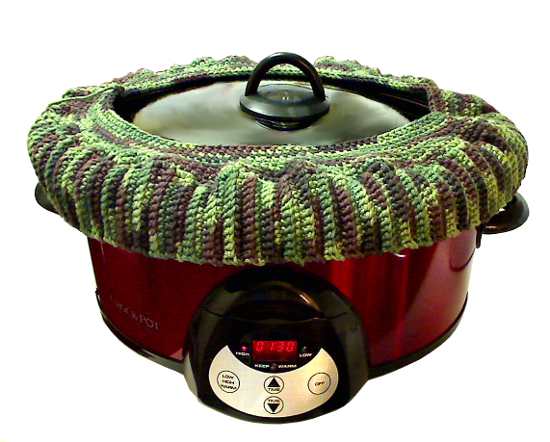
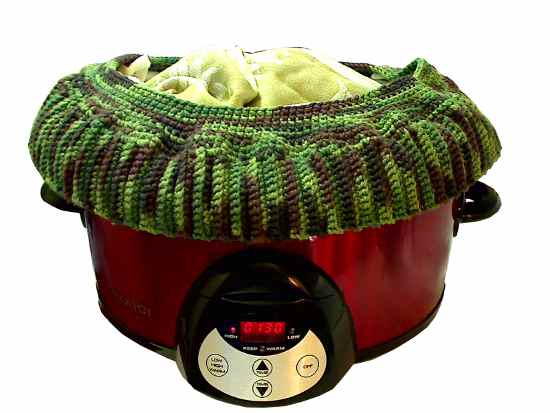
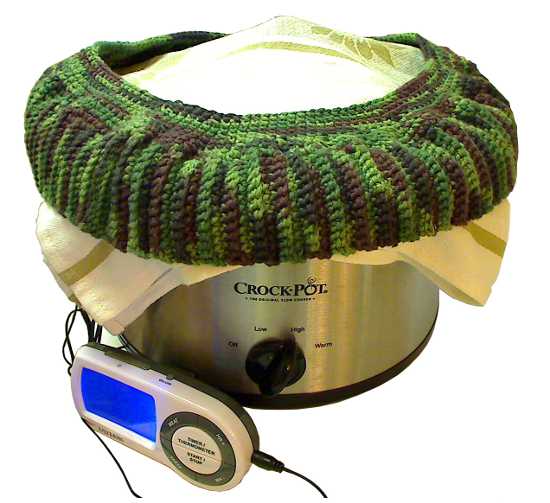
An alternative to the heavy stack of towels is a draft stop. A draft stop for a door closes off the gap between the door and the floor to block the air flow. This crocheted slow-cooker draft stop has a similar function. It's shaped like an open crown hat. The opening is stuffed with a dish towel to seal the gap between the lid and crock and to add a layer of insulation over the lid. It features a ribbed band that will stretch to fit cookers from 36 to 40 inches in diameter, the sizes of my 5-quart round and 5.5-quart oval cookers. The draft stop is crocheted with 100% cotton 4-ply yarn, which is machine-washable and dryable. The specified crochet needle is 4 sizes smaller than recommended for the yarn to produce a thick, insulating fabric.

Although the draft stop by itself will help retain heat, a dish towel insert greatly improves the performance. For those who'd like to made this an all-crochet project, the dish towel could be crocheted too. At one point, I considered crocheting circular and oval towel inserts (possibly in a larger, lighter-weight gauge) for my respective cookers. I would always opt for the 2-piece draft-stop plus towel insert, as opposed to a single-piece closed-crown design. The towel insert can be lifted out to peer into the crock, so the 2-piece draft stop doesn't interfere with the functionality of that glass lid as a one-piece might.

Fast crocheters could complete this project in a day. If I were to do it again, I'd widen the ribbed band by another 4 stitches or so for a more secure fit over my oval cooker. No other complaints though, as the draft stop is in constant rotation between my two large cookers. The pattern includes instructions for modifying the draft stop for other cooker models. It could easily be expanded to a full-size slow cooker cozy that would increase the energy efficiency of the cooker for baking and keep foods warmer when the cooker is unplugged. The challenge would be to crochet openings for the cooker's handles and heat selector knob or digital control panel - not difficult to do with a bit of thought.

Note: this pattern is very forgiving. Test fit the draft stop at each stage. A dropped stitch here or there should not mar the outcome.

Gauge: 5 sc sts per inch and 6 sc rows per inch

Materials:
  • 2 skeins Sugar'n Cream 100% cotton yarn (3oz/80gr and 150yds/138m)
  • 1 crochet hook (size D/3.25mm)
  • 1 lightweight dish towel, a few inches larger than diameter of slow cooker
Abbreviations:
  • ch : chain
  • sc : single crochet
  • slst : slip stitch
  • dec : decrease stitch
  • p/u : pick up
  • x : times (eg, 3x = 3 times)


A. The Elastic Side Band or Crown

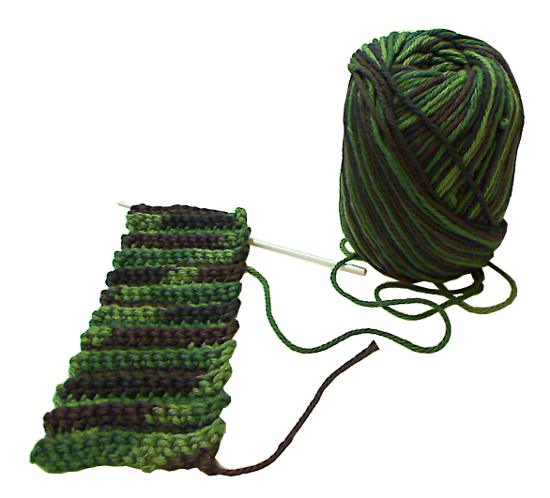
The ribbed band is about 2 inches wide. For a wider band, increase the number of stitches in the foundation chain. Row 2 onwards is done in ribbing stitch. The length of my band was about 43 inches or 86 rows.

Foundation: ch 13.
Row 1: sc in 2nd ch from hook, sc to end, ch 1, turn (12 sts, excluding last ch 1).
Row 2: sc to end, back of loops only, ch 1, turn.
Row 3+: repeat row 2 until desired length, ending on an even row.


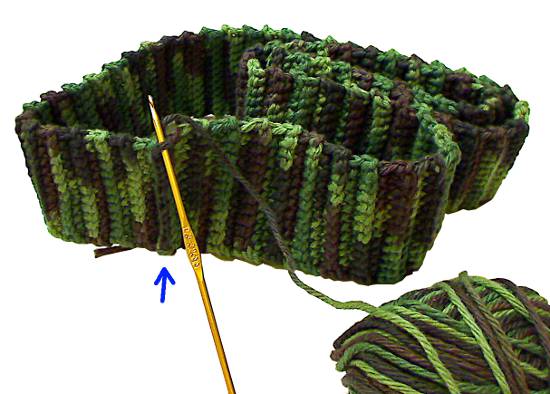
Finish band: holding ends together, right side out, sl st ends together to form band, ch 1.


B. Curving the Crown Inward


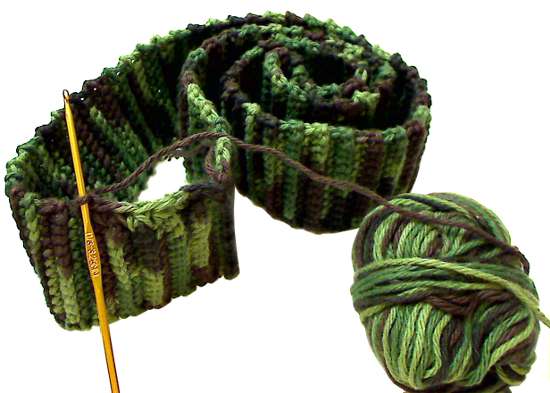
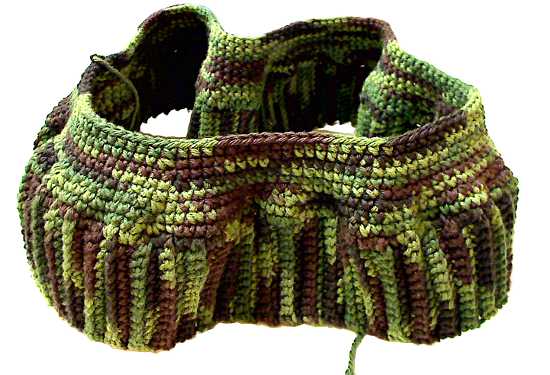
Although the draft stop is shaped like an open crown hat, a few inches of a top (a.k.a. the "tip" in millinery terms) is crocheted, like a flap, extending far enough to cover the rim of the cooker's lid. In this section, the foundation for the top is attached to the crown and then is built up leaning perpendicular to the crown.

After the ch 1 in the Finish band row, begin by picking up stitches along the top edge of the band. I did this at a rate of about 6 stitches per inch of ribbing for a total of 254 stitches. The exact number isn't critical. A 1 or 2 stitch difference won't affect the finished project, but a drastic difference could. Too few stitches and the band won't fit over the cooker. Too many stitches and the fit will be too loose. I had to re-do the pick-up row several times to get an even distribution of stitches.

Once the pick-up is done, decrease stitches in successive rows to curve the crown inward and form the foundation for the top of the draft stop. The curve has to turn sharply inward or the draft stop won't cover the cooker's lid adequately. There are many ways to choose the number of stitches to decrease. Here's how I did it.

To keep it simple, I decrease the same number of stitches each row. By trial and error, I chose a number that is 14% of the number of stitches picked up along the band's edge. That is, for 254 stitches, the number of decrease stitches per row is 36.

Foundation: p/u sc sts along edge of band (254 sts or approx. 6 sts per inch), slst join and ch 1.
Row 1: (sc 5, dec 1) 36x, sc to end, slst join, ch 1. (218 sts remaining)
Row 2: (dec 1, sc 4)36x, sc to end, slst join, ch 1. (182 sts remaining)
Row 3: (sc 3, dec 1)36x, sc to end, slst join, ch 1. (146 sts remaining)
Row 4: (sc 1) around, slst join, ch 1. (This is the last bending row.)


C. Build The Top Flap

The final rows further develop the top of the draft stop. Unlike the previous section, the goal here is to crochet a flat disk growing inward. I figured out the rate of stitch decrease with some math to narrow the range and then by trial and error. The repeating pattern is one row of stitch decreases followed by one row of straight single crochet.

[Row numbers continued from section B]

Row 5: (sc18, dec 1) 7x, sc to end. (139 sts remaining)
Row 6: sc to end.
Row 7: (dec1, sc17) 7x, sc to end. (132 sts remaining)
Row 8: sc to end.

Bind off.


D. How To Use The Draft Stop


The two pictures above show my 5.5-quart oval cooker. In the second one, the draft stop is slipped over the top of the cooker without a towel insert. It's important to press the top of the draft stop down over the lid, so that it impedes as much heat loss as possible. Although the draft stop doesn't lie completely flat against the lid, in my tests, it reduced the preheat time by up to 20 minutes.

Inserting a small dish towel into the opening the draft stop (and spreading it out over the lid) reduced the preheat time by another 10 minutes - a total reduction of 30 minutes (or 30% of the regular preheat time).

The following 3 pictures show my 5-quart round cooker with a remote thermometer probe going under the lid. The probe's cord and the wire hook that latches the probe in place prop the lid up and prevent it from seating properly. Without a draft stop, pre-heating this cooker setup would take a very long time. In this procedure, a dish towel is laid over the cooker first and the draft stop over that. Either way is effective, but the latter ensures that the gap created by the thermometer's cord and wire are completely covered before the draft stop clamps the towel down.


Wednesday, August 25, 2010

Cranberry Indian Pudding (Baked)


[ Equipment: oven or slow cooker. For more information about the terminology in this recipe, see Low Temperature Baking: A Journey of 3 Paths ].

This Indian pudding has a smooth, smooth texture with strong notes of corn and caramel from multiple infusions of milk and a long slow baking.  The cranberries float on top of the pudding, not in it, and hold onto their individuality through the baking process. Cranberry essences flow down with the milky infusions and scent the pudding, but don't overpower it.

I made it to celebrate this year's Independence Day holiday (July 4), having resolved to bake something associated with early America, with both the native peoples and the European settlers. The idea for an Indian pudding evolved from a study of early American baked dishes in Amelia Simmons' American Cookery, published way back in 1796 and billed as the first American cookbook. Just about all of those recipes are well suited for LTB, because oven temperatures in early homesteads were never accurate and recipes had to be flexible.

The section on puddings caught my especial attention, because I'd never tried baking a pudding. Rice pudding had the most variations. Indian pudding was second with 3 recipes. Except in New England where it's served as daily fare in restaurants, Indian pudding in the rest of the country turns up generally on Thanksgiving dinner tables in November (or maybe on February 17, which is National Indian Pudding Day - who knew?).

An Indian pudding on Independence Day is celebratory of the several cultures that helped early America to flourish (though I do see a taint of irony too). The dish is a culinary fusion of Native American and European roots. "Indian" is a reference to the cornmeal ingredient, because Native Americans taught the European settlers to grow corn, and they made a boiled porridge from cornmeal called suppone, which the settlers may have adapted to the form of an English hasty pudding.

Of the innumerable Indian pudding recipes online, the one from Boston's ancient Durgin Park restaurant, established decades before American Cookery was published, is famous. The recipe has allegedly passed down unchanged for those hundreds of years and is remarkable for its long baking time (5 to 7 hours) and the omission of any spices (no ginger, cinnamon or nutmeg) and extras like dried fruits.

However, I wanted some embellishment for my pudding. Of the 3 recipes for Indian pudding in American Cookery, I thought the first one best represented the modern trend of Indian puddings with provision for spices and dried fruits. Here it is below in all its brevity.

A Nice Indian Pudding

No. 1. 7 pints scalded milk, 7 spoons fine Indian meal, stir well together while hot, let stand till cooled; add 7 eggs, half pound raisins, 4 ounces butter, spice and sugar, bake one and half hour.

My recipe draws inspiration from those two recipes, as well as one in Fanny Farmer's The Boston Cooking-School Cook Book of 1906 and a recent pudding from the 2002 Cook's Illustrated American Classics cookbook. Like the Durgin-Park, my pudding is baked for over 5 hours and contains no spices. Like the American Cookery, my pudding has a high egg-to-milk ratio and an embellishment: dried cranberries. The idea for pre-cooking the cornmeal over a double boiler comes from Fanny Farmer's recipe for Indian pudding. The presence of flour in my pudding is a variation of a technique from the American Classics recipe.

The American Classics recipe calls for cornstarch to prevent  curdling (it has the same function in custards) and produces a creamier pudding. Cornstarch is gluten-free, but wasn't available in early America, so I substituted flour. The flour isn't traditional in an Indian pudding and it could be omitted, but then the pudding's texture won't be as silky smooth.

I believe that the purpose of the pre-cooking the cornmeal in Fanny Farmer's pudding is to speed up the baking process. In my recipe, the purpose of the pre-cooking is to create a very thick batter, so that the cranberries will float on top of the pudding and not sink into it. I've made puddings where the cranberries were mixed into the batter. The cranberries plumped up mushy and sweetened the surrounding pudding with too strong a cranberry flavor. I much prefer the dried cranberries to hold onto some of their toothy bite and intense flavor as a fruity burst in contrast to the earthier molasses and cornmeal.

In spite of the pre-cooked cornmeal, I have found that a long, long baking really does mellow out the flavors and soften the texture. After the first 3 hours, the changes are more subtle, but the improvement is noticeable. Plus, the extra time is an opportunity to infuse the pudding with more milk for a richer taste and a thick layered crust. A batter with the full quantity of milk at the start would have been too liquid float the cranberries. The procedure in my recipe of piercing the pudding for the milk to soak in isn't too different from Durgin-Park's method of stirring more milk into a partially baked, unset pudding.

Although the cranberries aren't baked into the pudding, they do scent the pudding each time milk is poured over them and soaks into the cornmeal. I tried reducing the number of infusions, but the flavoring is important to the whole pudding. The dried cranberries I had were Ocean Spray Craisins, which are pre-sweetened and resemble raisins (see the end of this recipe for pictures of this pudding made with actual raisins). If the Craisins are replaced with unsweetened dried cranberries, another 1/2 tablespoon of molasses or maple syrup could help to counter the tartness.

Speaking of sugar, I opted for a blend of molasses and maple syrup. As they did with the cultivation of corn, Native Americans taught the settlers how to tap maple trees and process the sap. Sugar cane was brought by the European settlers. The blend not only represents the early cultures, but adds a dimension of flavor. Re-balancing the sweeteners to be 100% molasses or 100% maple syrup is perfectly acceptable.

Makes 2 servings
- 260 calories per serving
- Oven temperature: 250°F/121°C
       
  • 1-1/2 cups milk (2% reduced fat or regular)
  • 3 tablespoons cornmeal
  • 1 teaspoon butter
  • pinch of salt
  • 1 large egg
  • 1 teaspoon all-purpose flour or 1/2 teaspoon cornstarch (see text)
  • 1 tablespoon unsulfured molasses (see text)
  • 1/2 tablespoon maple syrup, grade A amber (see text)
  • 1-1/2 tablespoon dried cranberries (see text)

Optional: Pre-heat oven or cooker to 250°F/121°C.


1. Combine corn meal, butter, salt and 3/4 cup of milk in a metal bowl or in the top of a double boiler.


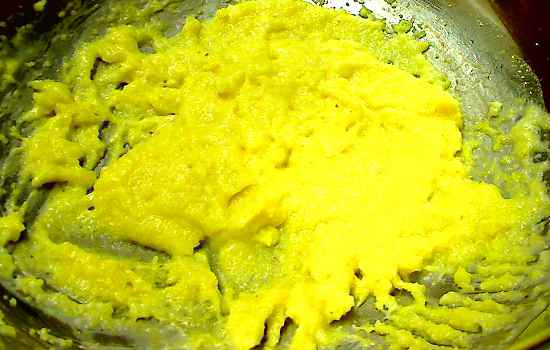
2. Put the bowl over a sauce pot of simmering water (the water should not touch the bowl) and cook covered until mixture thickens to a glop, about 10 minutes. Stir with a whisk every 5 minutes to break up any lumps. Remove from heat and let the cornmeal mixture cool for about 5 minutes. If the cornmeal is cooked too long, it will stiffen and the lumps will be hard to remove. Then add 1 to 2 teaspoons of water or milk to loosen the cornmeal.


3. In a cup, mix the egg and flour until well combined.


4. When the cornmeal mixture has cooled, add in the egg, molasses and maple syrup and mix until smooth.


5. Pour batter into a 1-1/2 cup ramekin and sprinkle dried cranberries over the top of the pudding. Put pudding in the oven or cooker and set for 250°F/121°C. If baking in a cooker, place moisture-absorbing towels under the lid.


6. After 1 hour (or 1-1/2 hours if oven was not pre-heated), open oven or cooker, removing any moisture-absorbing towels. Puncture deeply the top of the pudding in several places with a fork, taking care not to press any cranberries into the pudding. Measure out 1/4 cup of hot milk and slowly pour over the top of the pudding, letting it sink in, until it starts to puddle on the top. The pudding may not drink in all of the milk before it puddles. Close oven or re-cover the cooker (replacing the moisture-absorbing towels) and continue baking. If baking in a cooker and the temperature has dropped below 250°F, adjust the heat settings to bring the cooker quickly back up to the target temperature.

Repeat this step two more times every 1-1/2 hours, for a maximum infusion of 3/4 cup of milk (less milk is fine too).


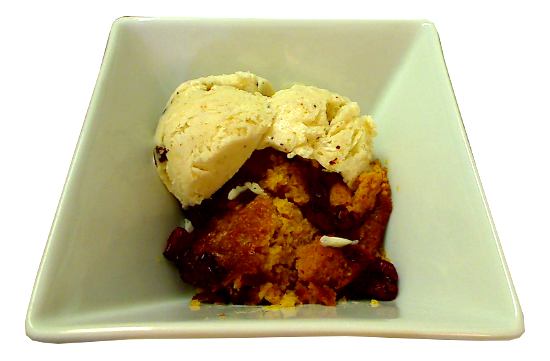
7. After 6 to 7 hours total baking time, remove pudding from oven and serve hot. The picture at the beginning of this recipe shows a serving of the pudding sprinkled with more dried cranberries. Fresh fruit, like diced apple, is also a delicious accompaniment. In the picture below, the pudding is served with scoops of homemade nutmeg-chocolate-chip ice milk.


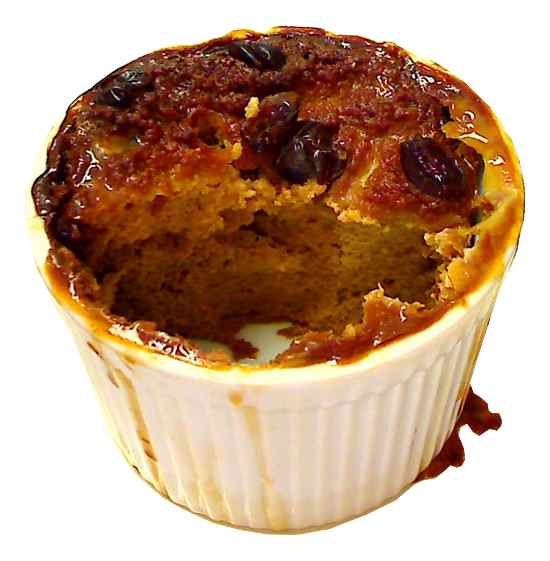
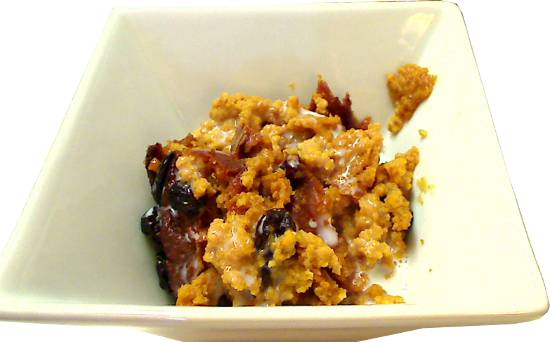
Here's the raisin version of the Indian pudding. It's shown served with a drizzle of sweetened light cream or a non-diary cream.